
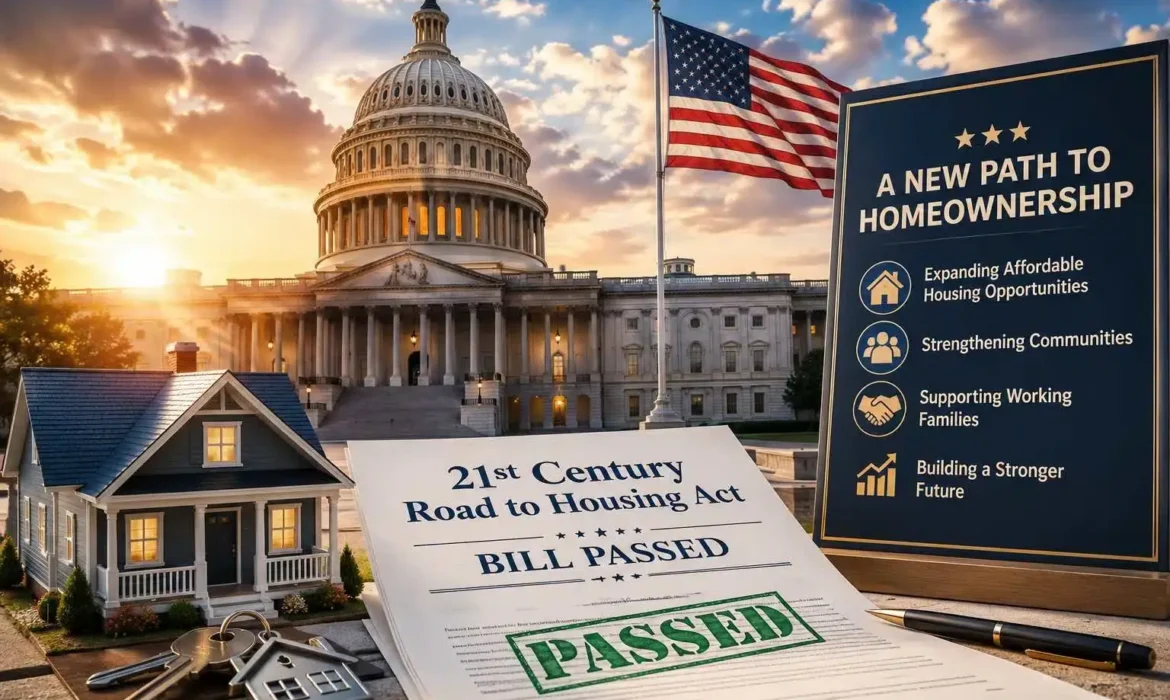
What the 21st Century Road to Housing Act Could Mean for Homeowners, Buyers, Builders, and the Future of Housing
For years, the housing market across the United States has faced growing pressure from rising home prices, limited inventory, increased interest rates, and an increasing number of residential properties being purchased by large private equity firms rather than individual families.
Now, lawmakers in Washington are attempting to address some of those challenges through new legislation designed to expand housing opportunities and improve affordability for future homeowners.
Recently passed by Congress, the 21st Century Road to Housing Act aims to create new pathways toward homeownership while encouraging housing development and limiting some of the market pressures created by institutional investors purchasing large numbers of residential properties.
While much of the legislation is still being analyzed by economists, builders, and financial institutions, the potential impact could extend far beyond simply making it easier to buy a home.
For homeowners, future buyers, construction companies, and even local communities, this legislation could shape the housing market for years to come.
Why Housing Affordability Has Become a National Concern
Over the past several years, home affordability has become one of the largest economic concerns facing American families.
According to reporting from National Association of Home Builders (NAHB), rising construction costs, supply chain disruptions, labor shortages, and elevated financing costs have significantly reduced housing affordability nationwide.
At the same time, institutional investors and private equity groups have increasingly purchased residential properties as long-term rental investments, reducing available inventory for traditional homebuyers.
Research from Redfin and CoreLogic has shown that investor-owned residential purchases have become a growing concern in many fast-growing markets, particularly in states like Arizona, where population growth continues driving demand.
For many families, purchasing a home has become increasingly difficult.
What the 21st Century Road to Housing Act Is Designed to Do
The legislation focuses on several broad objectives intended to improve housing accessibility.
Among the major goals:
- Encourage new residential housing development
- Reduce barriers to private homeownership
- Increase available housing inventory
- Support financing options for qualified buyers
- Limit market distortions caused by large-scale institutional property acquisition
- Incentivize local housing development and infrastructure expansion
In simple terms, lawmakers are attempting to shift the housing market back toward individual ownership rather than allowing large investment groups to dominate residential inventory.
For buyers who have struggled competing against cash-heavy corporate investors, this could eventually improve access to available homes.
What This Means for Current Homeowners
For existing homeowners, the legislation may create several long-term effects.
If new housing development increases substantially, inventory could begin stabilizing in many markets. That may help slow the rapid home price increases seen over the past several years.
While some homeowners may worry about reduced appreciation rates, a healthier housing market often creates greater long-term economic stability overall.
Increased development may also improve neighborhood infrastructure, expand local services, and reduce some of the supply pressures that have made housing difficult for younger buyers entering the market.
For homeowners considering renovations, expanded housing activity may also increase competition among builders and contractors as demand grows across multiple sectors.
What This Means for Potential Homebuyers
This is where the legislation could create the most immediate long-term benefit.
If restrictions on institutional residential acquisitions reduce investor competition, first-time buyers may face fewer bidding wars against large investment firms purchasing homes with cash offers.
Expanded housing development could also increase available inventory.
More inventory generally creates:
- More buyer choices
- Reduced pricing pressure
- Improved financing accessibility
- Greater long-term affordability
For younger buyers who have spent years watching homeownership drift further out of reach, this legislation may represent an important shift.
What This Means for the Construction Industry
For builders, developers, and contractors, this legislation could become a major growth driver.
If federal policy successfully encourages new housing development, construction demand could increase substantially across:
- Residential development
- Infrastructure expansion
- Utility construction
- Remodeling and renovation services
- Roofing and exterior construction
- Building materials supply chains
- Skilled labor demand
Organizations such as the Associated General Contractors of America (AGC) have repeatedly emphasized that increased housing demand often creates ripple effects throughout nearly every segment of the construction economy.
For construction companies, increased housing activity often means expanded opportunity.
The Ripple Effect Across Other Industries
Housing policy rarely impacts only real estate.
As new home development increases, related industries often experience parallel growth.
This may include:
- Mortgage and lending institutions
- Insurance providers
- Home improvement retailers
- Appliance manufacturers
- Interior design firms
- Furniture retailers
- Smart home technology providers
- Property management companies
- Local municipalities collecting permit revenue
The housing market functions as one of the largest interconnected sectors of the American economy.
Changes in housing policy tend to affect nearly everyone.
Why This Matters Here in Arizona
Arizona remains one of the fastest-growing housing markets in the country.
Cities like Phoenix, Scottsdale, and Tucson continue seeing strong population growth, rising housing demand, and increasing pressure on available inventory.
For Arizona residents, legislation designed to improve housing affordability could directly influence future homeownership opportunities while creating increased demand across the construction and development sectors.
At AZ Construction & Renovation, we closely monitor changes affecting Arizona’s housing market because policy decisions often shape how communities grow, how homes are built, and how families invest in their future.
Whether through new residential development, home renovations, reconstruction services, or large-scale construction projects, the future of housing directly affects all of us.
And as housing policy continues evolving, one thing remains certain:
The future of homeownership will continue shaping the future of construction itself.