Why Black Mold Is More Dangerous Than Most Arizona Homeowners Realize
Every year, monsoon season arrives in Arizona with much-needed rain, dramatic thunderstorms, and unfortunately, a long list of property issues that many homeowners don’t immediately see coming. While fallen trees, roof leaks, and flooding often grab the most attention, one of the most serious threats frequently begins after the storm has passed.
That threat is mold growth.
More specifically, homeowners should understand the dangers associated with black mold, a type of fungus that can begin developing quickly after water intrusion and may create serious health concerns for both people and pets when left untreated. While many people think mold is simply an unpleasant cosmetic issue, the reality is far more complicated.
And in many cases, the most dangerous mold growth is the mold you never see.
Mold Grows Faster Than Most People Think
One of the biggest misconceptions homeowners have is assuming mold takes weeks or months to begin developing after water damage. In reality, mold spores can begin colonizing damp surfaces in as little as 24 to 48 hours when moisture is present.
Arizona homeowners are especially vulnerable during monsoon season because water often enters structures through places that aren’t immediately visible. A small roof leak, improperly sealed window, burst pipe, or even standing water trapped behind drywall can quietly create the ideal environment for mold growth long before anyone notices a problem.
The longer moisture remains untreated, the faster contamination spreads.
Black Mold Often Grows Where You Can’t See It
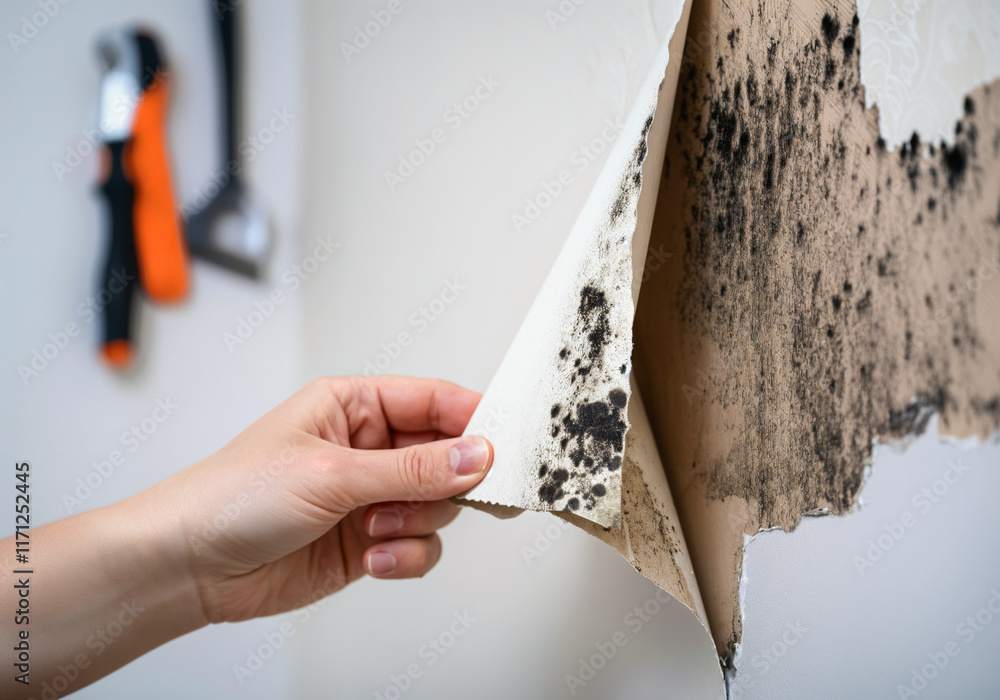
When people hear the phrase “black mold,” they often picture dark spots forming on bathroom ceilings or around windows. But visible mold growth is often only a small part of a much larger problem.
Mold commonly develops in hidden areas such as:
- Behind drywall after roof leaks
- Under flooring following water intrusion
- Inside HVAC systems and ductwork
- Behind kitchen and bathroom cabinetry
- Inside insulation within walls
- Around window frames where moisture accumulates
- Inside crawl spaces or attic structures
Because mold reproduces by releasing microscopic airborne spores, contamination can spread throughout a home long before visible signs begin appearing.
If you can see mold, there is often more growing where you cannot.
Why Black Mold Affects Human Health
Certain mold species, particularly Stachybotrys chartarum — commonly referred to as black mold — can produce compounds called mycotoxins.
Mycotoxins are naturally occurring toxic substances produced by fungi that may trigger serious physical reactions when inhaled or encountered repeatedly over time.
Short-term exposure may cause symptoms including:
- Persistent coughing
- Nasal congestion
- Eye irritation
- Headaches
- Skin irritation
- Difficulty breathing
- Fatigue
- Worsening asthma symptoms
Individuals with asthma, allergies, weakened immune systems, and young children are often more sensitive to mold exposure.
The challenge is that many people do not immediately connect these symptoms to hidden mold growing inside the home.
Pets Can Be Affected Too
Mold exposure does not only affect humans.
Dogs and cats can also react negatively when exposed to airborne mold spores over extended periods. Veterinarians often report symptoms such as respiratory distress, lethargy, excessive scratching, sneezing, watery eyes, digestive issues, and unusual behavioral changes in animals exposed to contaminated environments.
Because pets spend most of their time indoors and remain closer to flooring surfaces where spores settle, prolonged exposure can become a serious concern.
Long-Term Exposure Creates Bigger Problems
Perhaps the greatest concern surrounding mold contamination is prolonged exposure.
When mold continues growing undetected for weeks or months, occupants may experience chronic respiratory inflammation, recurring sinus infections, persistent fatigue, neurological irritation, increased asthma sensitivity, and ongoing immune system stress.
At the same time, mold slowly damages the structure itself.
Drywall weakens. Insulation deteriorates. Wood framing begins retaining moisture. Flooring materials break down. HVAC systems may begin circulating contaminated air throughout the entire building.
What begins as a small leak can eventually become a much larger structural and environmental problem.
Why Fast Mold Remediation Matters
During Arizona’s monsoon season, responding quickly after water damage is critical.
At AZ Construction & Renovation, our mitigation specialists understand that mold contamination is not simply a cosmetic issue — it is a structural and health concern that requires immediate professional attention.
Our team provides rapid response water mitigation, moisture detection, structural drying, mold assessment, and professional remediation services designed to stop contamination before it spreads further.
If your home or commercial property has experienced water intrusion during monsoon season, acting quickly can make the difference between a minor repair and a major environmental hazard.
Because sometimes the most dangerous damage is the damage you cannot see.