
For Arizona homeowners who have been considering a move, the latest mortgage news may have complicated the decision.
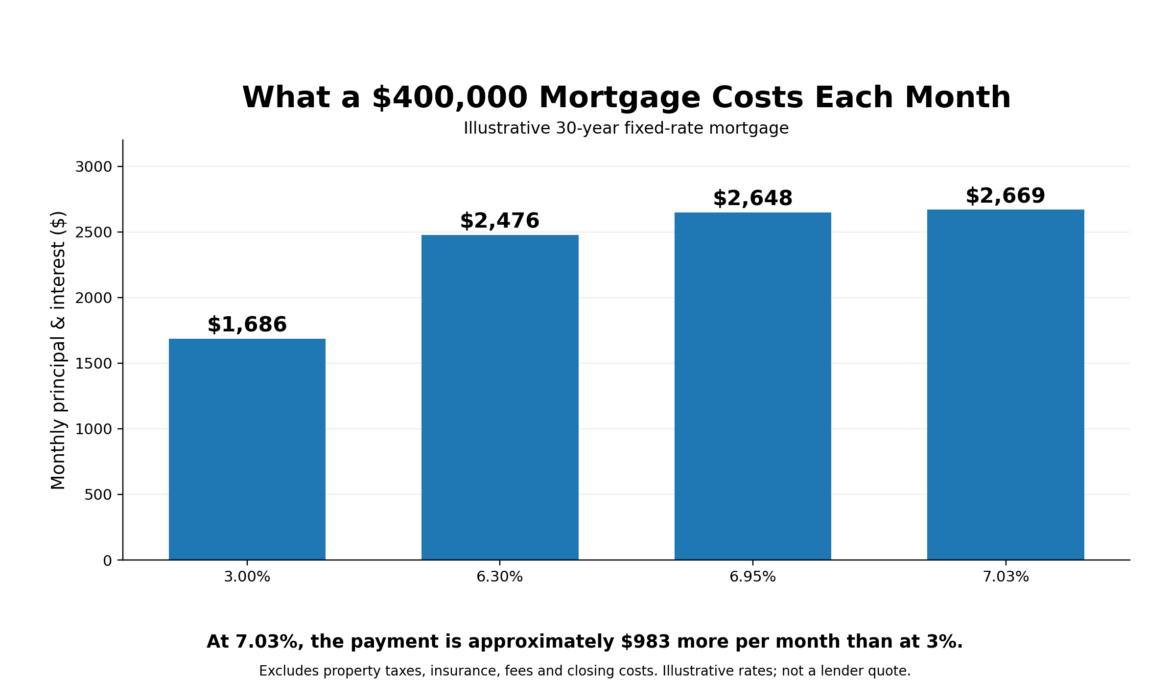
According to Freddie Mac’s Primary Mortgage Market Survey, the average 30-year fixed mortgage rate reached 7.03% on September 24, 2026. That’s up from 6.95% the previous week and 6.30% a year earlier.
For homeowners who purchased or refinanced when rates were considerably lower, moving now could mean trading an affordable mortgage for a substantially more expensive one. But staying put isn’t necessarily the answer for everyone, either.
The more useful question may be: Does your current home still meet your needs, and what would it cost to make it work better?
The Real Cost of Trading Your Mortgage
Consider a homeowner with a $400,000 mortgage balance at a fixed 3% interest rate. Their monthly principal and interest payment on a new 30-year loan at that rate would be approximately $1,686.
Financing the same amount at today’s 7.03% average would increase that payment to approximately $2,670.
That’s nearly $1,000 more every month, before property taxes, insurance, HOA fees, or maintenance.
Of course, most homeowners won’t be borrowing the exact same amount again. Their next mortgage will depend on the selling price, remaining equity, down payment, and cost of the replacement property.
Still, the example illustrates why homeowners are taking a harder look at their existing properties before putting them on the market.
Option 1: Move — When Your Current Home No Longer Fits
Sometimes, moving is the appropriate decision regardless of mortgage rates.
A growing family may need more bedrooms. A homeowner may need to relocate for employment, move closer to relatives, or transition into a different living arrangement. However, before listing your home, consider the complete financial picture.
Selling and buying involve more than the purchase price. Real estate commissions, closing costs, moving expenses, potential repairs, and a new mortgage can all affect the final calculation.
If your primary reason for moving is an outdated kitchen, cramped living space, or lack of a home office, those problems may be solvable without purchasing another property.
Option 2: Invest in the Home You Already Own
For homeowners who like their neighborhood and have accumulated equity, improving the existing property presents another possibility.
And the numbers suggest that homeowners are already thinking this way.
According to the 2025 Remodeling Impact Report from the National Association of REALTORS® and the National Association of the Remodeling Industry, Americans spent an estimated $603 billion on home remodeling projects in 2024.
The report also found that 64% of surveyed homeowners had a greater desire to remain in their homes after completing renovations.
But investing in a home doesn’t always mean undertaking a major remodel.
Strategic improvements may include replacing aging roofing, upgrading insulation, installing energy-efficient windows and doors, improving HVAC efficiency, or addressing deferred maintenance. In Arizona, these improvements deserve particular attention because of our intense summer heat, monsoon storms, and long cooling seasons.
The objective is to improve the property’s functionality, durability, comfort, and potentially its market appeal. And unlike purchasing a new home, improving an existing property doesn’t automatically require replacing its original mortgage.
Option 3: Renovate — Create the Home You Were Planning to Buy
Here’s where the decision gets interesting.
What if the home you want is already the home you own, just with a different layout?
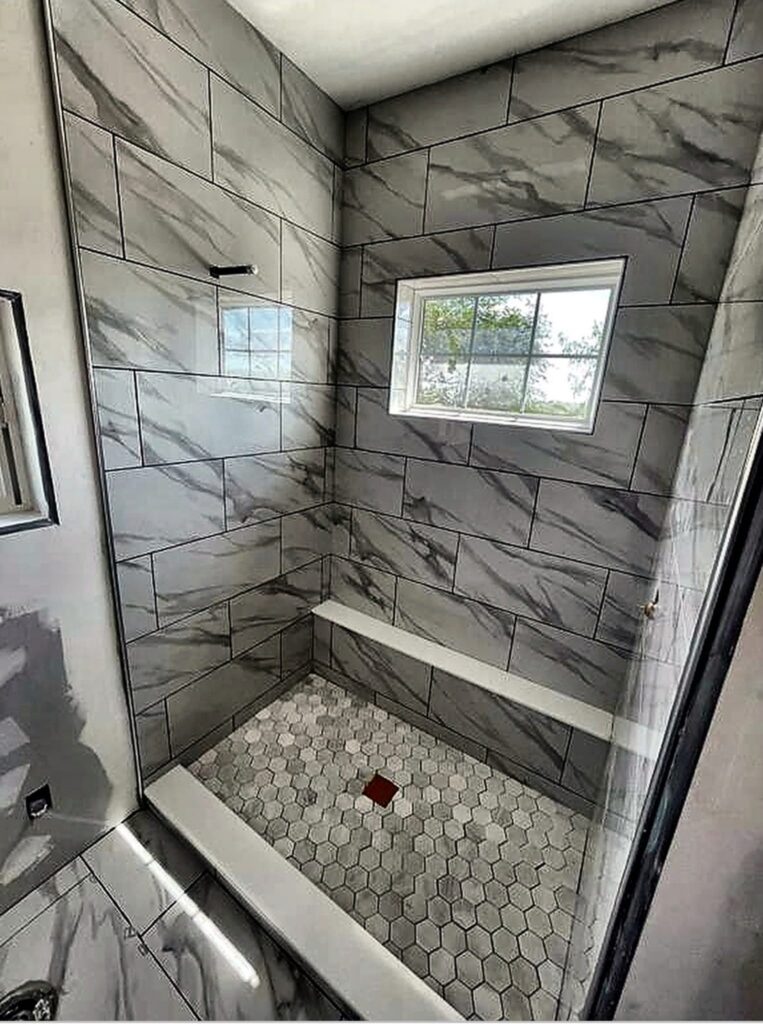
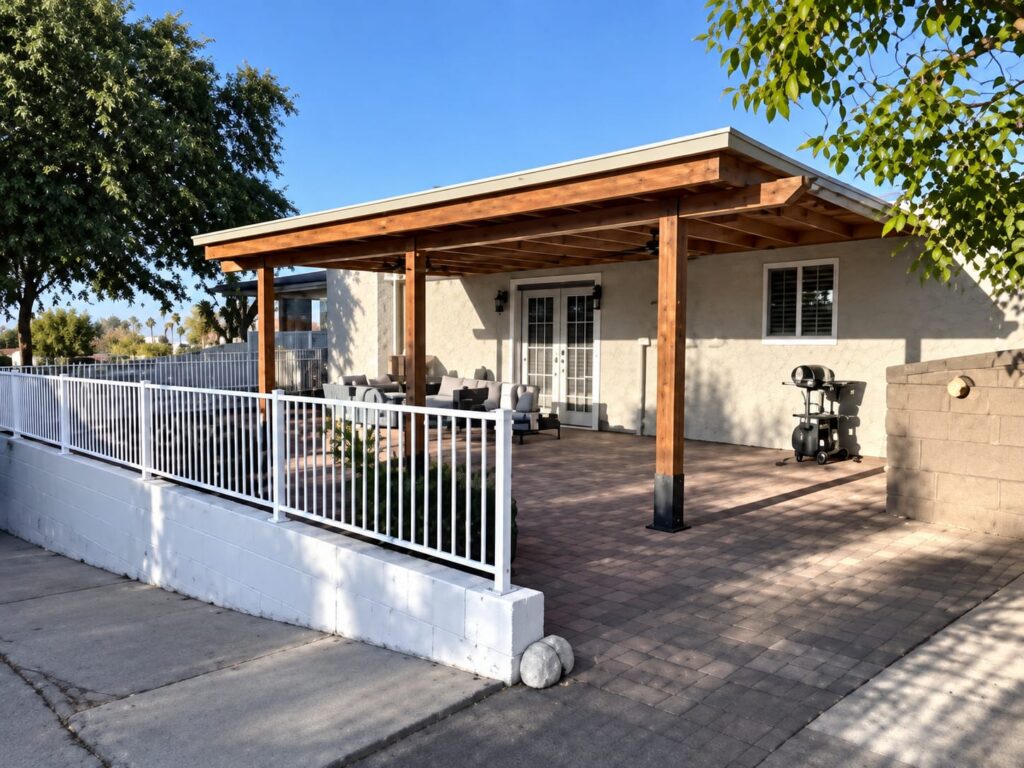
A well-planned renovation can address many of the reasons homeowners begin searching for another property.
Renovation can also allow homeowners to preserve what they already value: their neighborhood, schools, commute, outdoor space, and existing mortgage terms.
However, renovation financing matters.
A home equity loan, HELOC, cash-out refinance, or other financing arrangement may introduce new borrowing costs. In particular, refinancing an entire low-rate mortgage at a higher rate could eliminate much of the financial advantage of staying.
The right financing structure depends on available equity, loan terms, project scope, and the homeowner’s long-term plans.
Which Renovations Actually Deliver Value?
Not every renovation returns its full cost when a home is sold.
The 2025 NAR/NARI report illustrates the distinction between resale value and personal satisfaction.
For example, its remodeling-professional estimates found that a new steel front door could recover approximately 100% of its cost, while a closet renovation recovered 83%.
Meanwhile, kitchen upgrades, new roofing, and primary bedroom suite additions received the report’s highest homeowner satisfaction scores.
That’s an important distinction.
A renovation may improve everyday living substantially even if it doesn’t generate an equivalent increase in resale value.
For homeowners planning to remain in their properties for another decade, the daily benefits of a functional kitchen, accessible bathroom, or more comfortable living space may be as meaningful as the potential return at resale.
A Practical Decision Checklist
Before deciding whether to move, invest, or renovate, ask yourself:
- What specifically isn’t working in my current home?
- Can those issues be addressed through renovation or an addition?
- What is my current mortgage rate compared with available financing?
- How much equity do I have?
- What would a comparable replacement property cost?
- How long do I expect to remain in the home?
- What improvements would provide the greatest everyday benefit?
The answers may point toward a modest improvement, a major renovation, or a move.
The key is comparing realistic costs rather than making the decision based on mortgage rates alone.
The Bottom Line: Your Home Should Work for Your Future
Mortgage rates above 7% have changed the financial equation for many homeowners.
But they haven’t changed the fundamental question: Does your home support the way you want to live?
For some Arizona homeowners, purchasing a different property will still make sense. Others may find that maintaining, upgrading, or expanding their existing home offers a more practical path forward.
At AZ Construction & Renovation, we work with homeowners throughout the Phoenix and Tucson metropolitan areas on renovations, additions, casitas, roofing, energy-efficiency improvements, and other residential construction projects.
Whether you’re considering a single-room renovation or a substantial reconfiguration of your existing home, understanding the possibilities is the first step.
Before you decide to move, find out what your current home could become.